
Explore Aquatic Plants by Group
Select a plant group, then click any plant to see a short introduction. The best-suited species depend on the individual water feature, climate, maintenance goals, and local regulations.
Bog Plants
Plants suited to consistently moist soil and shallow edges, where they can add color, provide habitat, reduce erosion and runoff, and improve shoreline appearance.

Pickerelweed
Upright foliage with purple-blue flower spikes. Useful around sunny, shallow pond margins, but its rhizomes can spread and should be managed.

Lizard’s Tail
A moisture-loving native with curved white flower spikes that can soften naturalistic edges.

Iris
Aquatic and moisture-loving iris are available in blue, purple, white, yellow, pink, and multicolored varieties. Species must be selected carefully: yellow flag iris can spread aggressively and is considered invasive in many areas.

Marsh Marigold
A low-growing bog plant valued for bright spring flowers in cool, consistently moist conditions.

Sweet Flag
Grasslike foliage that provides texture at wet margins. Some forms spread by rhizomes, so compact varieties and contained planting are preferred.
Marginal Plants
Emergent plants rooted in shallow water, with most of their foliage held above the surface.

Dwarf Papyrus
A compact architectural plant for shallow shelves and containers in warm, sunny settings.

Arrowhead
Recognizable arrow-shaped leaves and white flowers make this a strong natural-edge plant.

Canna
Bold foliage and colorful flowers add tropical character near wet margins. Variety selection, climate, and containment should be considered before planting.

Taro
Bold heart-shaped leaves provide height and a lush tropical character. It can spread in warm wet areas, may need containment, and all raw plant parts contain irritating calcium oxalate crystals.

Horsetail
A vertical, reedlike accent that spreads aggressively through underground rhizomes. It is difficult to remove once established and is best kept in a sealed container.
Water Lilies & Lotus
Rooted aquatic plants whose leaves and flowers create surface color, shade, and visual focus.

Hardy Water Lily
Reliable seasonal flowers and floating leaves, with varieties available in several colors and sizes.

Tropical Water Lily
Often produces vivid flowers above the water and may bloom more freely in warm conditions.

American Lotus
A large native lotus with elevated leaves and pale yellow flowers. It spreads vigorously by rhizomes and can dominate shallow water unless contained and maintained.

Sacred Lotus
Dramatic leaves and flowers create a focal point, but vigorous rhizomes require ample room, strong containers, and regular growth control.

Victoria Amazonica — Giant Water Lily
The famous giant Amazon water lily produces enormous floating leaves. It requires a very large, warm, carefully managed display and is generally impractical for an ordinary residential pond.
Floating Plants
Plants that remain at or near the surface and can provide shade and nutrient uptake when carefully managed.

Water Hyacinth
Showy flowers and hanging roots, but it can spread rapidly and is restricted in some locations.

Water Lettuce
Rosettes of velvety leaves offer surface cover; use depends on climate, containment, and local rules.

Frogbit
A small floating plant with rounded leaves. Exact species identification and legality are important.

Duckweed
Tiny floating plants that reproduce quickly and may require frequent removal to maintain open water.

Azolla
A delicate floating fern that can form dense mats; appropriate use requires active management.
Submerged Plants
Plants growing primarily below the surface, where they can contribute habitat and biological activity.

Hornwort
A rootless submerged plant that provides underwater structure and must be kept from becoming excessive.

Anacharis / Elodea
A commonly recognized submerged plant group; species identification matters because rules differ.

Vallisneria
Ribbonlike underwater leaves can form useful submerged beds, but runners may create dense colonies and require thinning.

Cabomba / Fanwort
Fine-textured submerged foliage. Some species are invasive or restricted, so identification is essential.

Native Pondweed
A broad plant group that may offer food and habitat when a locally suitable native species is selected.
This is not an exhaustive list of aquatic species. These are simply some of the more popular plants commonly found in natural ponds and lakes. If you are interested in another species, please let us know—we would be happy to discuss whether it is appropriate for your system.
Explore Aquatic Plants by Group
Select a plant group, then click any plant to see a short introduction. This is a draft catalog for review; final selections depend on the individual water feature, climate, maintenance goals, and local regulations.
Bog Plants
Plants suited to consistently moist soil and shallow edges, where they can add color, habitat, and shoreline interest.
Pickerelweed
Upright foliage with purple-blue flower spikes. Useful around sunny, shallow pond margins, but its rhizomes can spread and should be managed.
Lizard’s Tail
A moisture-loving native with curved white flower spikes that can soften naturalistic edges.

Iris
Aquatic and moisture-loving iris are available in blue, purple, white, yellow, pink, and multicolored varieties. Species must be selected carefully: yellow flag iris can spread aggressively and is considered invasive in many areas.
Marsh Marigold
A low-growing bog plant valued for bright spring flowers in cool, consistently moist conditions.

Sweet Flag
Grasslike foliage that provides texture at wet margins. Some forms spread by rhizomes, so compact varieties and contained planting are preferred.
Marginal Plants
Emergent plants rooted in shallow water, with most of their foliage held above the surface.
Dwarf Papyrus
A compact architectural plant for shallow shelves and containers in warm, sunny settings.
Arrowhead
Recognizable arrow-shaped leaves and white flowers make this a strong natural-edge plant.

Water Canna
Tall tropical-looking foliage and flowers for larger features with adequate shallow planting space.

Taro
Bold heart-shaped leaves provide height and a lush tropical character. It can spread in warm wet areas, may need containment, and all raw plant parts contain irritating calcium oxalate crystals.
Horsetail
A vertical, reedlike accent that spreads aggressively through underground rhizomes. It is difficult to remove once established and is best kept in a sealed container.
Water Lilies & Lotus
Rooted aquatic plants whose leaves and flowers create surface color, shade, and visual focus.
Hardy Water Lily
Reliable seasonal flowers and floating leaves, with varieties available in several colors and sizes.
Tropical Water Lily
Often produces vivid flowers above the water and may bloom more freely in warm conditions.
American Lotus
A large native lotus with elevated leaves and pale yellow flowers. It spreads vigorously by rhizomes and can dominate shallow water unless contained and maintained.
Sacred Lotus
Dramatic leaves and flowers create a focal point, but vigorous rhizomes require ample room, strong containers, and regular growth control.
Victoria Amazonica — Giant Water Lily
The famous giant Amazon water lily produces enormous floating leaves. It requires a very large, warm, carefully managed display and is generally impractical for an ordinary residential pond.
Floating Plants
Plants that remain at or near the surface and can provide shade and nutrient uptake when carefully managed.
Water Hyacinth
Showy flowers and hanging roots, but it can spread rapidly and is restricted in some locations.
Water Lettuce
Rosettes of velvety leaves offer surface cover; use depends on climate, containment, and local rules.
Frogbit
A small floating plant with rounded leaves. Exact species identification and legality are important.
Duckweed
Tiny floating plants that reproduce quickly and may require frequent removal to maintain open water.
Azolla
A delicate floating fern that can form dense mats; appropriate use requires active management.
Submerged Plants
Plants growing primarily below the surface, where they can contribute habitat and biological activity.
Hornwort
A rootless submerged plant that provides underwater structure and must be kept from becoming excessive.
Anacharis / Elodea
A commonly recognized submerged plant group; species identification matters because rules differ.
Vallisneria
Ribbonlike underwater leaves can form useful submerged beds, but runners may create dense colonies and require thinning.
Cabomba / Fanwort
Fine-textured submerged foliage. Some species are invasive or restricted, so identification is essential.
Native Pondweed
A broad plant group that may offer food and habitat when a locally suitable native species is selected.
Draft plant guide for review. Photographs are species-matched reusable files from Wikimedia Commons. Complete creator and license attribution will be included before publication.
Explore Aquatic Plants by Group
Select a plant group, then click any plant to see a short introduction. This is a draft catalog for review; final selections depend on the individual water feature, climate, maintenance goals, and local regulations.
Bog Plants
Plants suited to consistently moist soil and shallow edges, where they can add color, habitat, and shoreline interest.
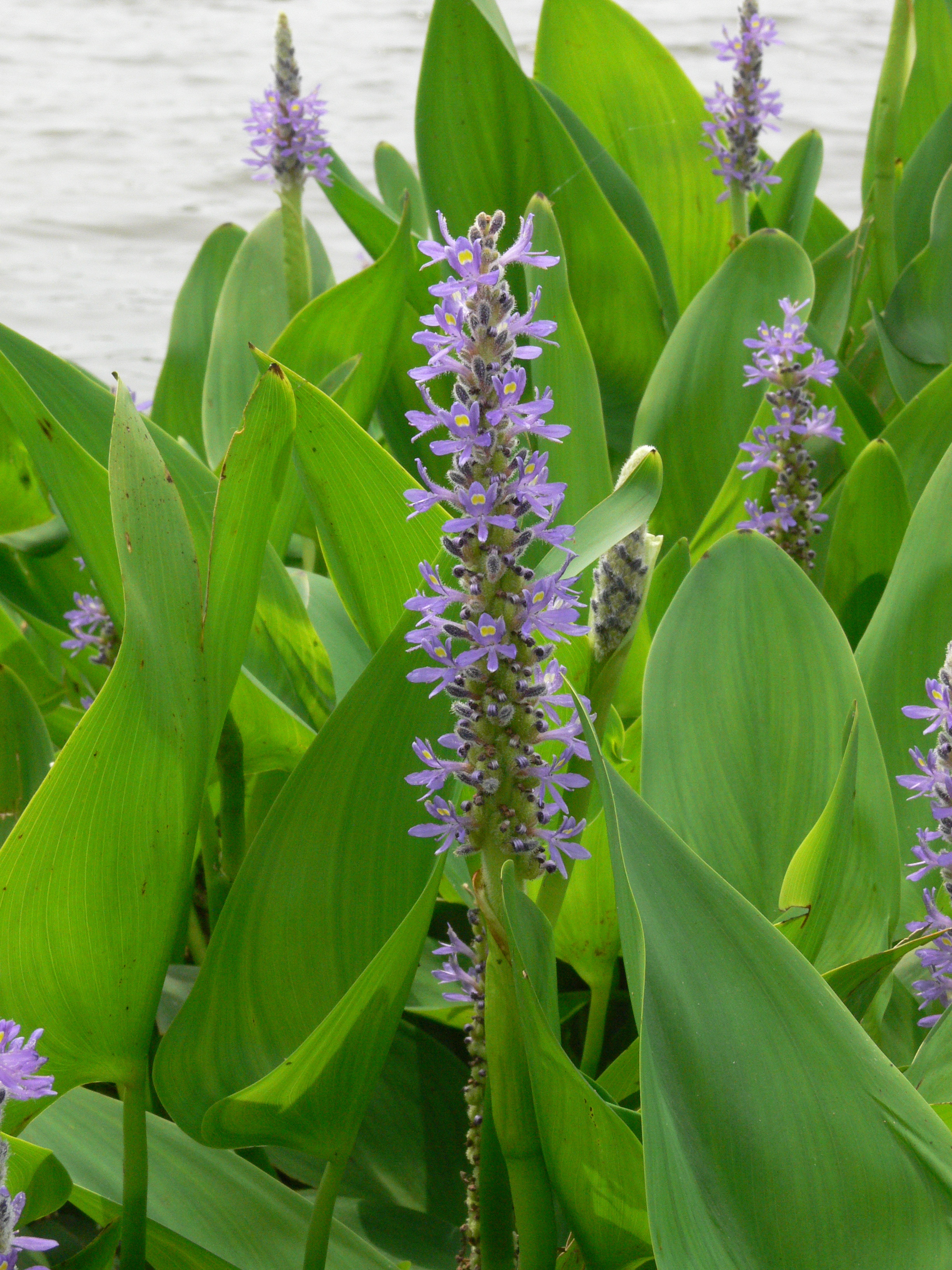
Pickerelweed
Upright foliage with purple-blue flower spikes. Useful around sunny, shallow pond margins, but its rhizomes can spread and should be managed.
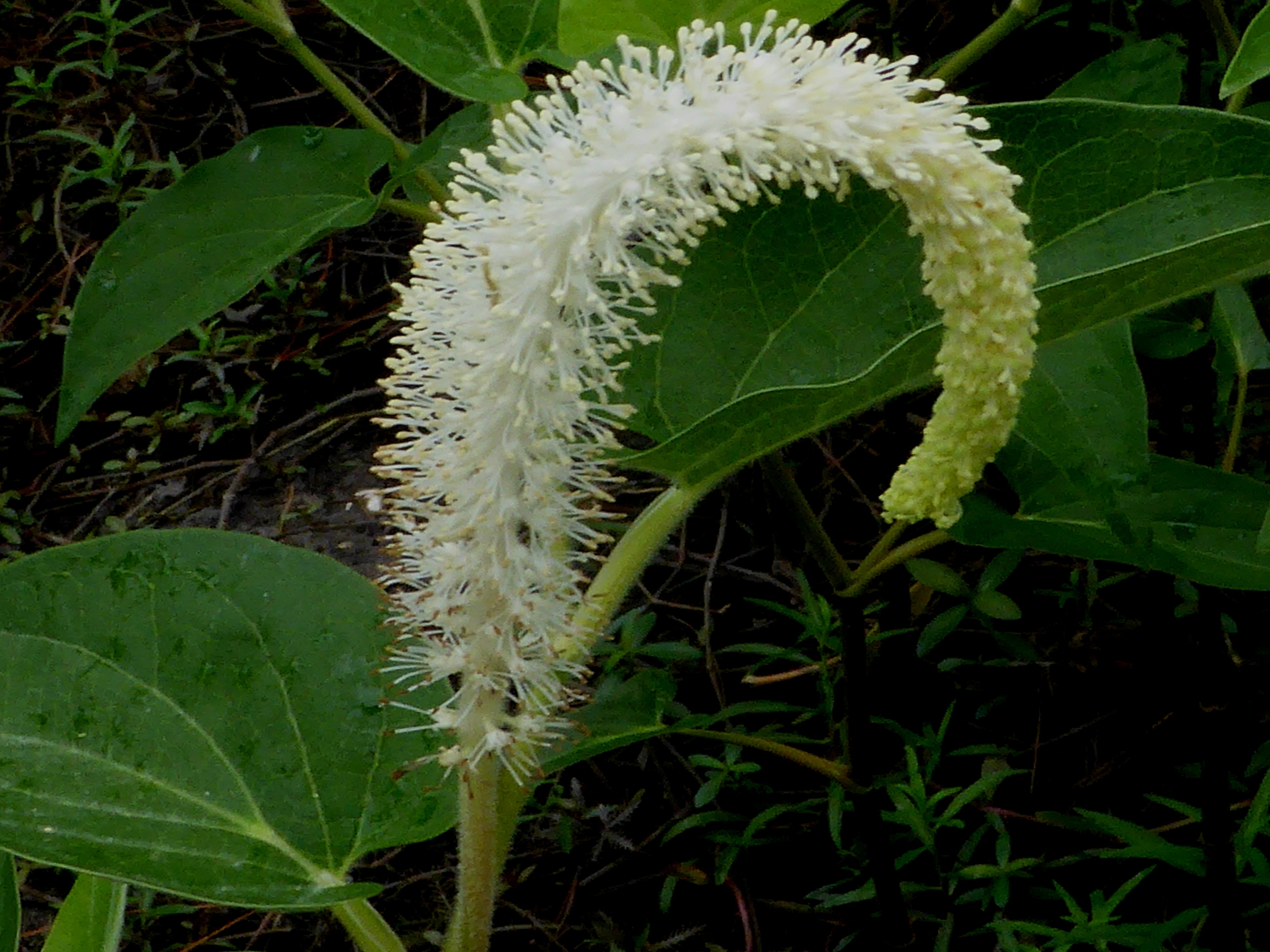
Lizard’s Tail
A moisture-loving native with curved white flower spikes that can soften naturalistic edges.
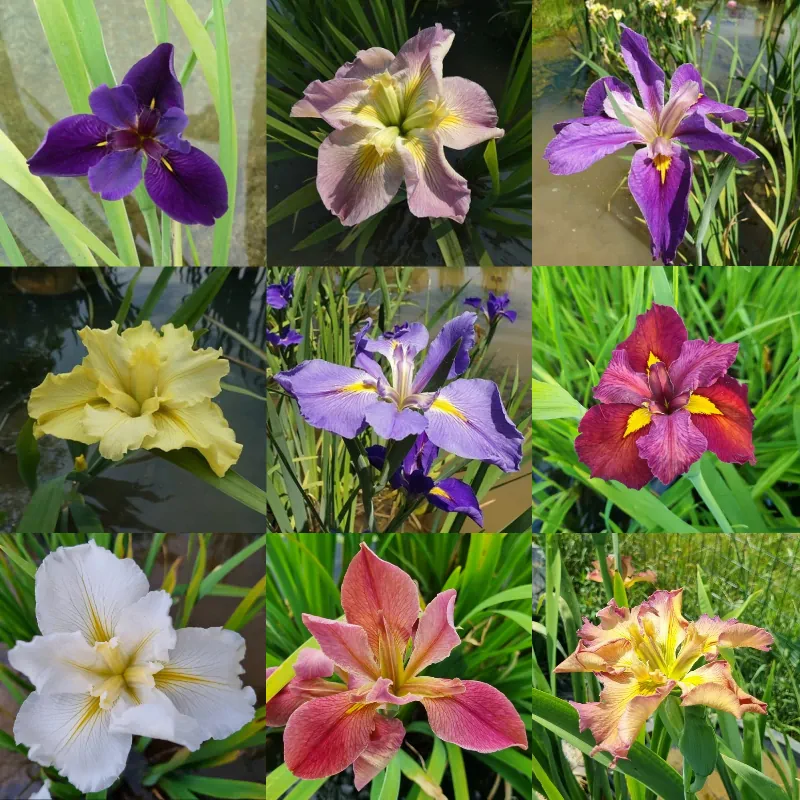
Iris
Aquatic and moisture-loving iris are available in blue, purple, white, yellow, pink, and multicolored varieties. Species must be selected carefully: yellow flag iris can spread aggressively and is considered invasive in many areas.
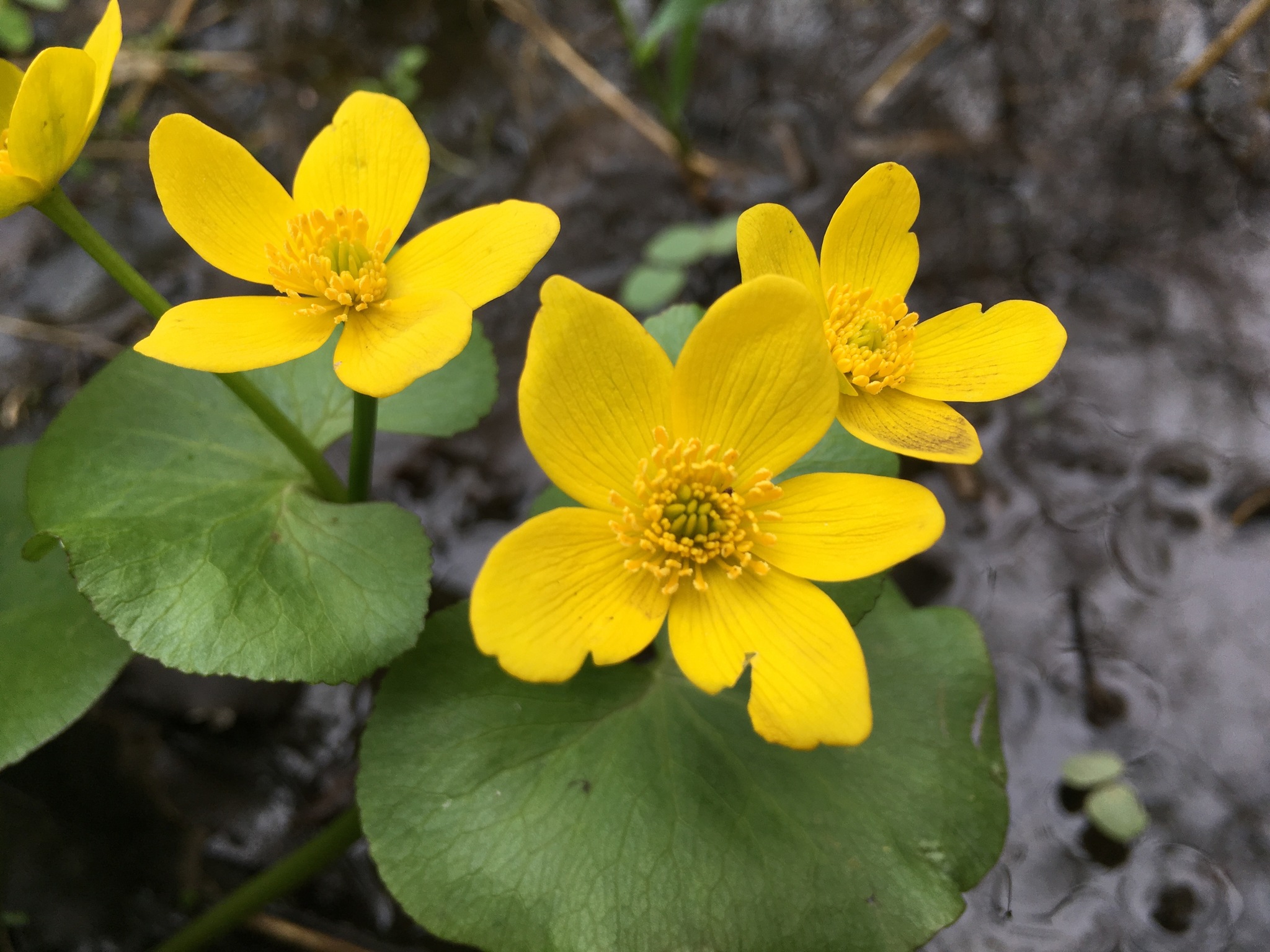
Marsh Marigold
A low-growing bog plant valued for bright spring flowers in cool, consistently moist conditions.
Sweet Flag
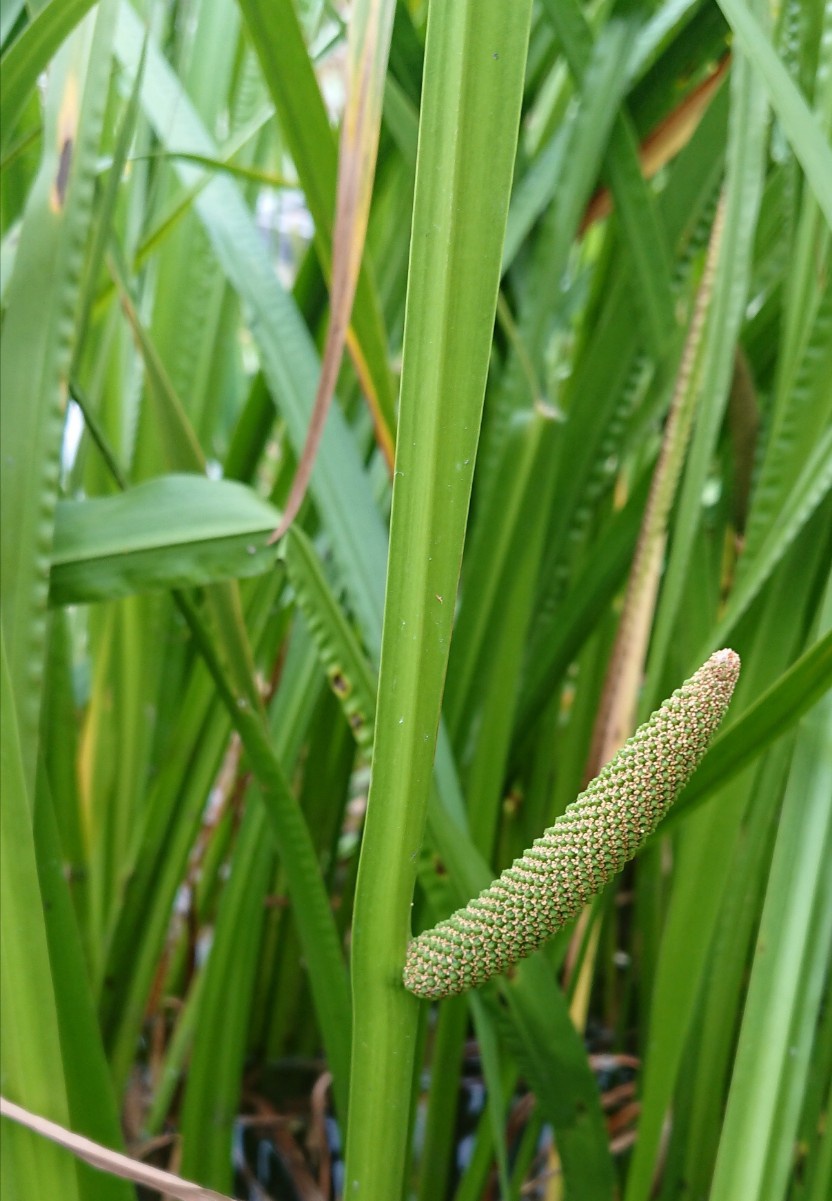
Grasslike foliage that provides texture at wet margins. Some forms spread by rhizomes, so compact varieties and contained planting are preferred.
Marginal Plants
Emergent plants rooted in shallow water, with most of their foliage held above the surface.
Dwarf Papyrus
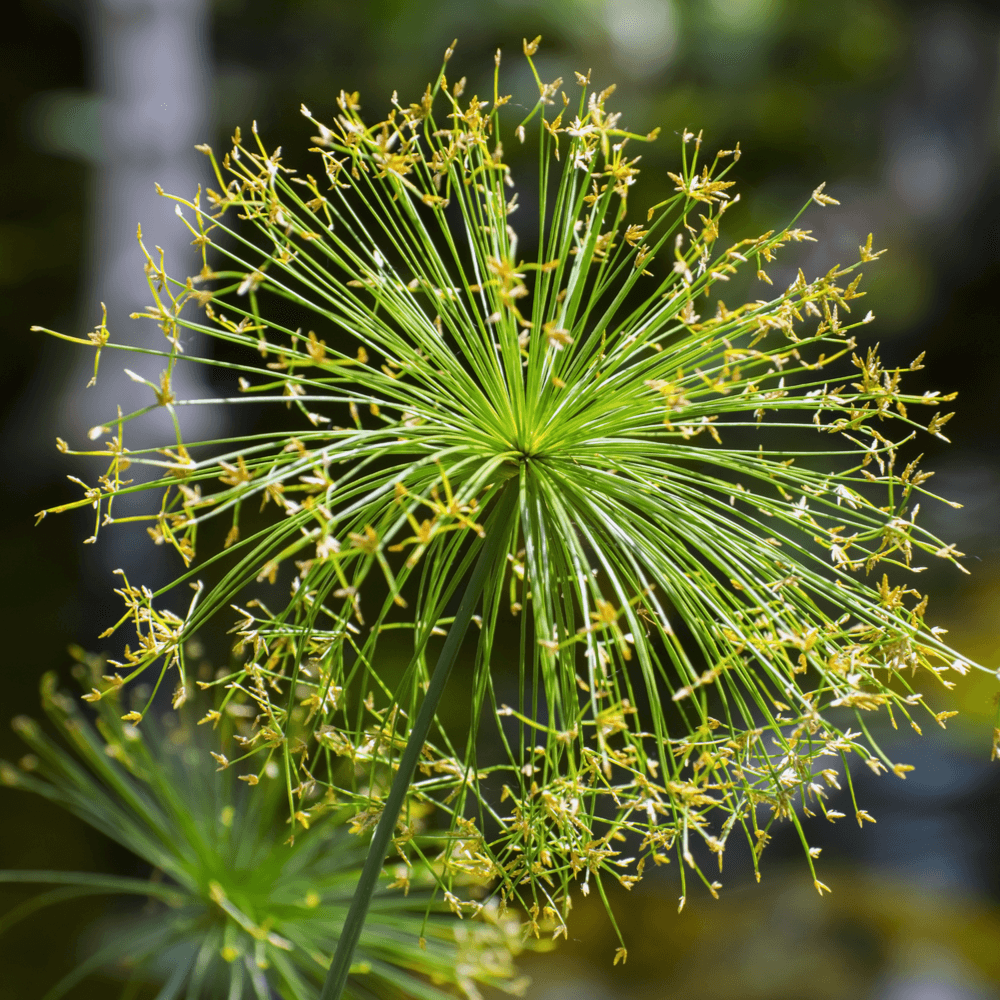
A compact architectural plant for shallow shelves and containers in warm, sunny settings.
Arrowhead
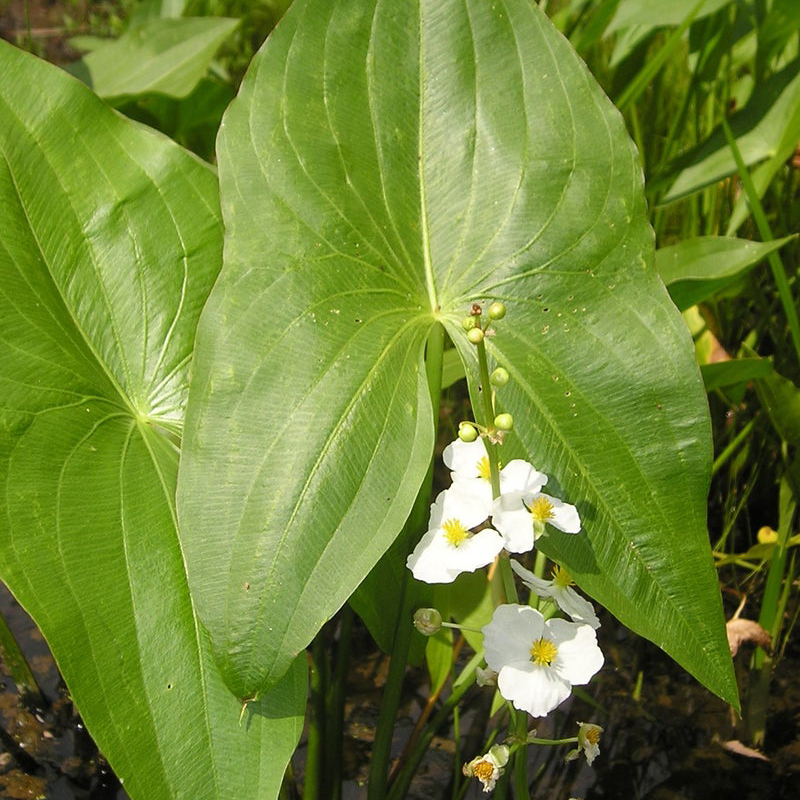
Recognizable arrow-shaped leaves and white flowers make this a strong natural-edge plant.
Water Canna
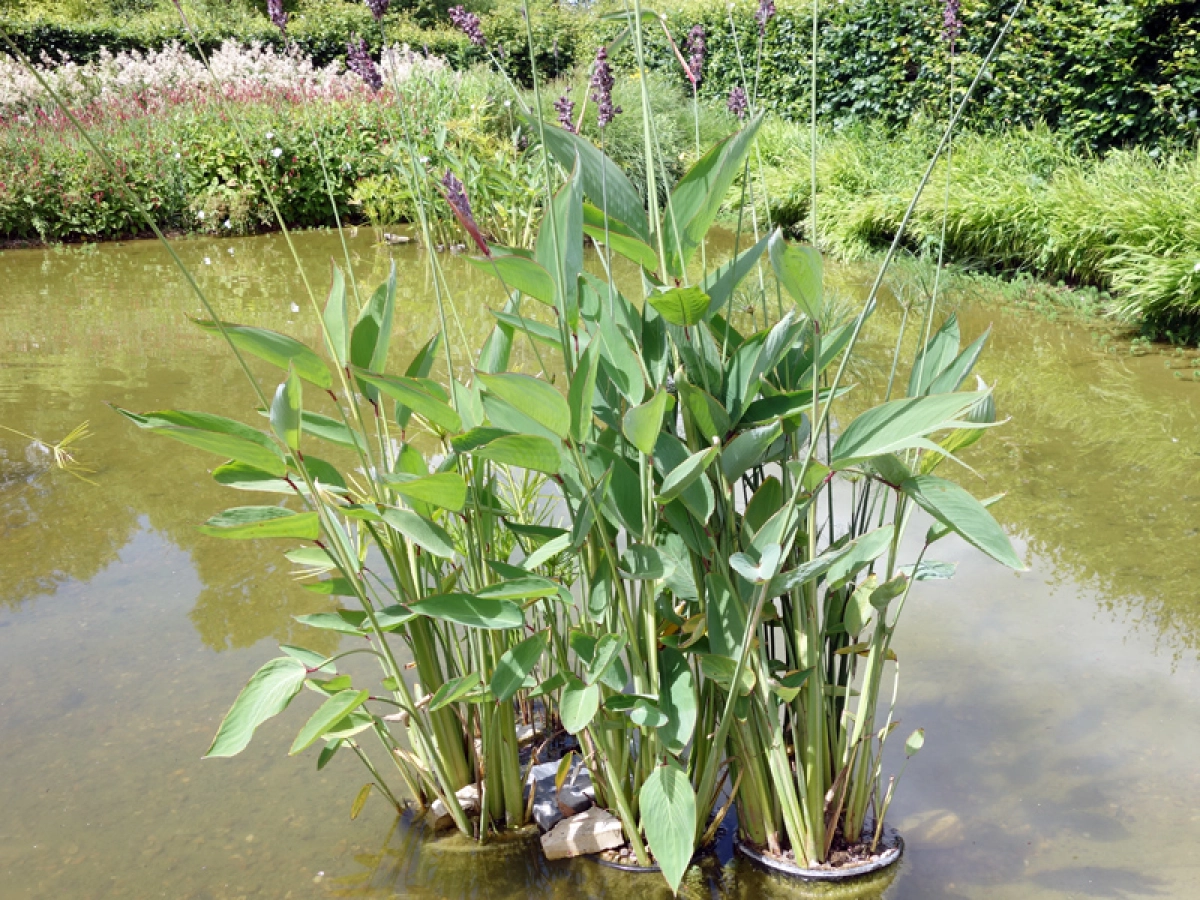
Tall tropical-looking foliage and flowers for larger features with adequate shallow planting space.

Taro
Bold heart-shaped leaves provide height and a lush tropical character. It can spread in warm wet areas, may need containment, and all raw plant parts contain irritating calcium oxalate crystals.
Horsetail
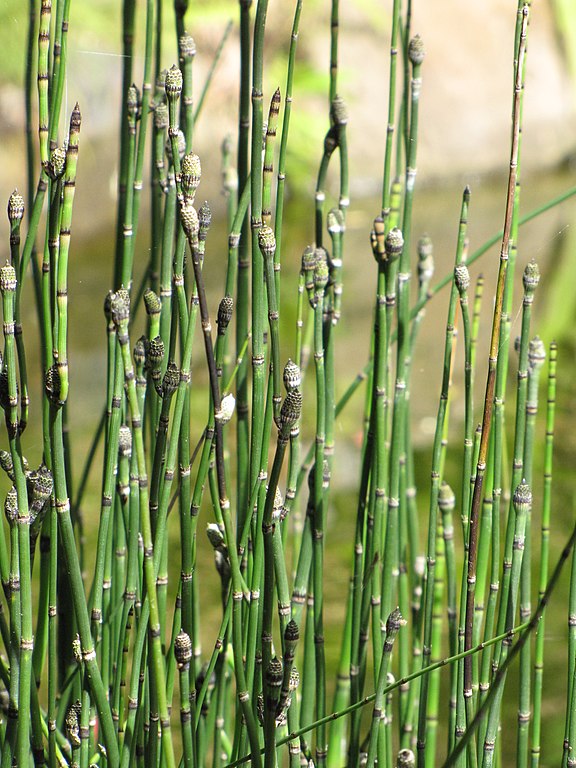
A vertical, reedlike accent that spreads aggressively through underground rhizomes. It is difficult to remove once established and is best kept in a sealed container.
Water Lilies & Lotus
Rooted aquatic plants whose leaves and flowers create surface color, shade, and visual focus.
Hardy Water Lily
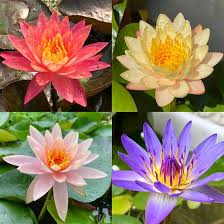
Reliable seasonal flowers and floating leaves, with varieties available in several colors and sizes.

Tropical Water Lily
Often produces vivid flowers above the water and may bloom more freely in warm conditions.

American Lotus
A large native lotus with elevated leaves and pale yellow flowers. It spreads vigorously by rhizomes and can dominate shallow water unless contained and maintained.

Sacred Lotus
Dramatic leaves and flowers create a focal point, but vigorous rhizomes require ample room, strong containers, and regular growth control.
Victoria Amazonica — Giant Water Lily
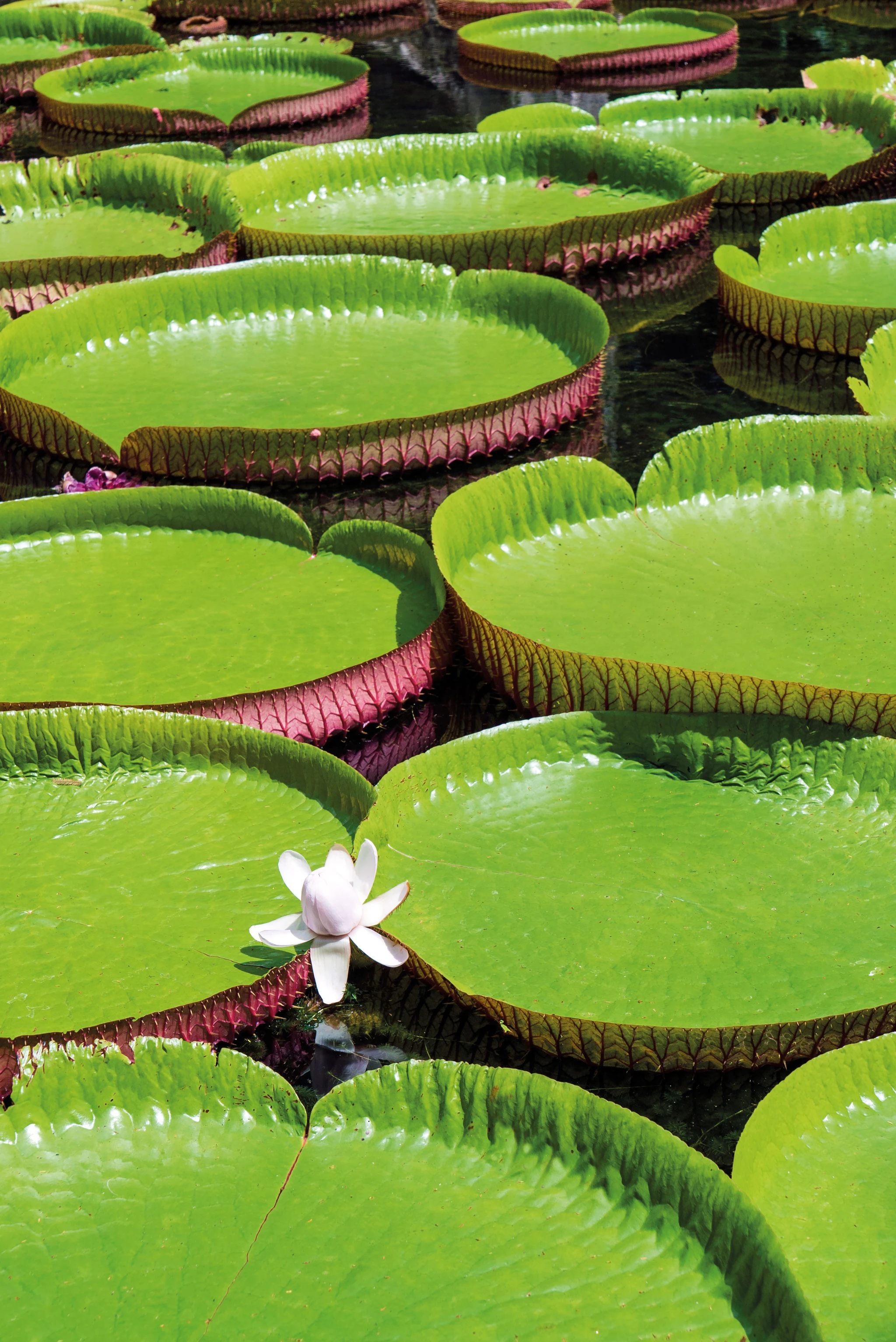
The famous giant Amazon water lily produces enormous floating leaves. It requires a very large, warm, carefully managed display and is generally impractical for an ordinary residential pond.
Floating Plants
Plants that remain at or near the surface and can provide shade and nutrient uptake when carefully managed.

Water Hyacinth
Showy flowers and hanging roots, but it can spread rapidly and is restricted in some locations.
Water Lettuce
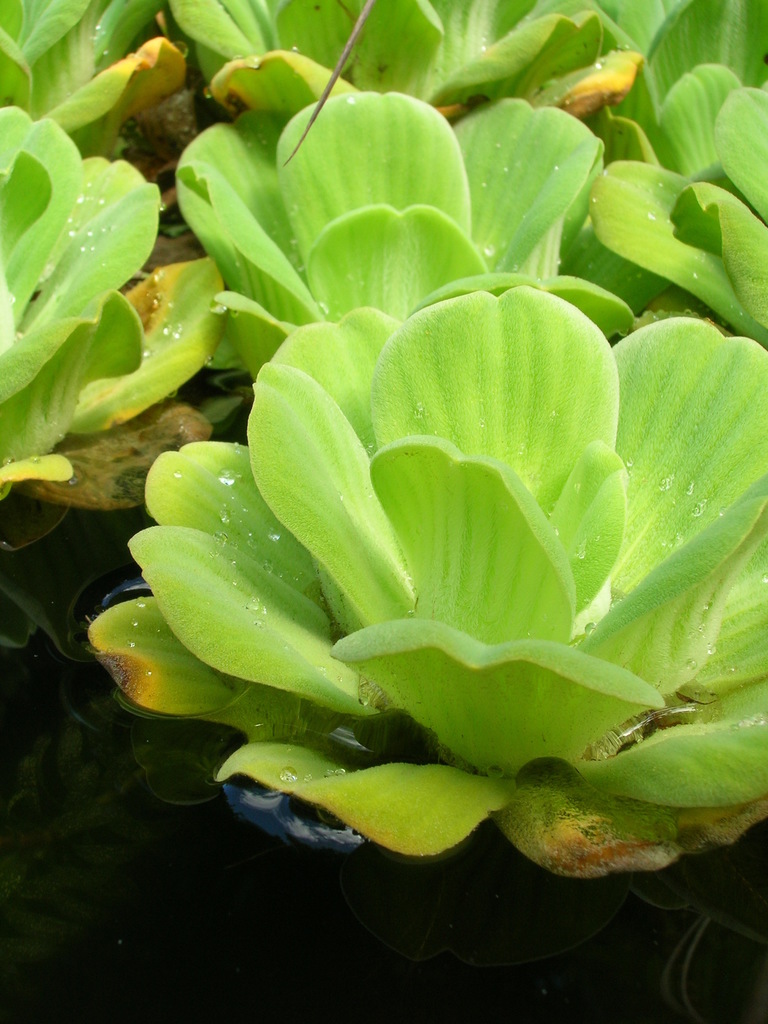
Rosettes of velvety leaves offer surface cover; use depends on climate, containment, and local rules.

Frogbit
A small floating plant with rounded leaves. Exact species identification and legality are important.
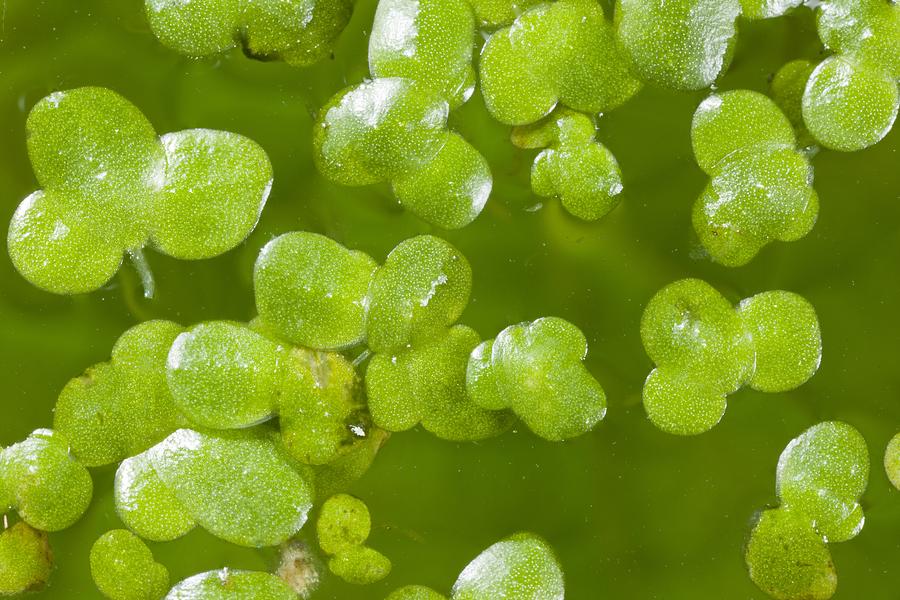
Duckweed
Tiny floating plants that reproduce quickly and may require frequent removal to maintain open water.

Azolla
A delicate floating fern that can form dense mats; appropriate use requires active management.
Submerged Plants
Plants growing primarily below the surface, where they can contribute habitat and biological activity.
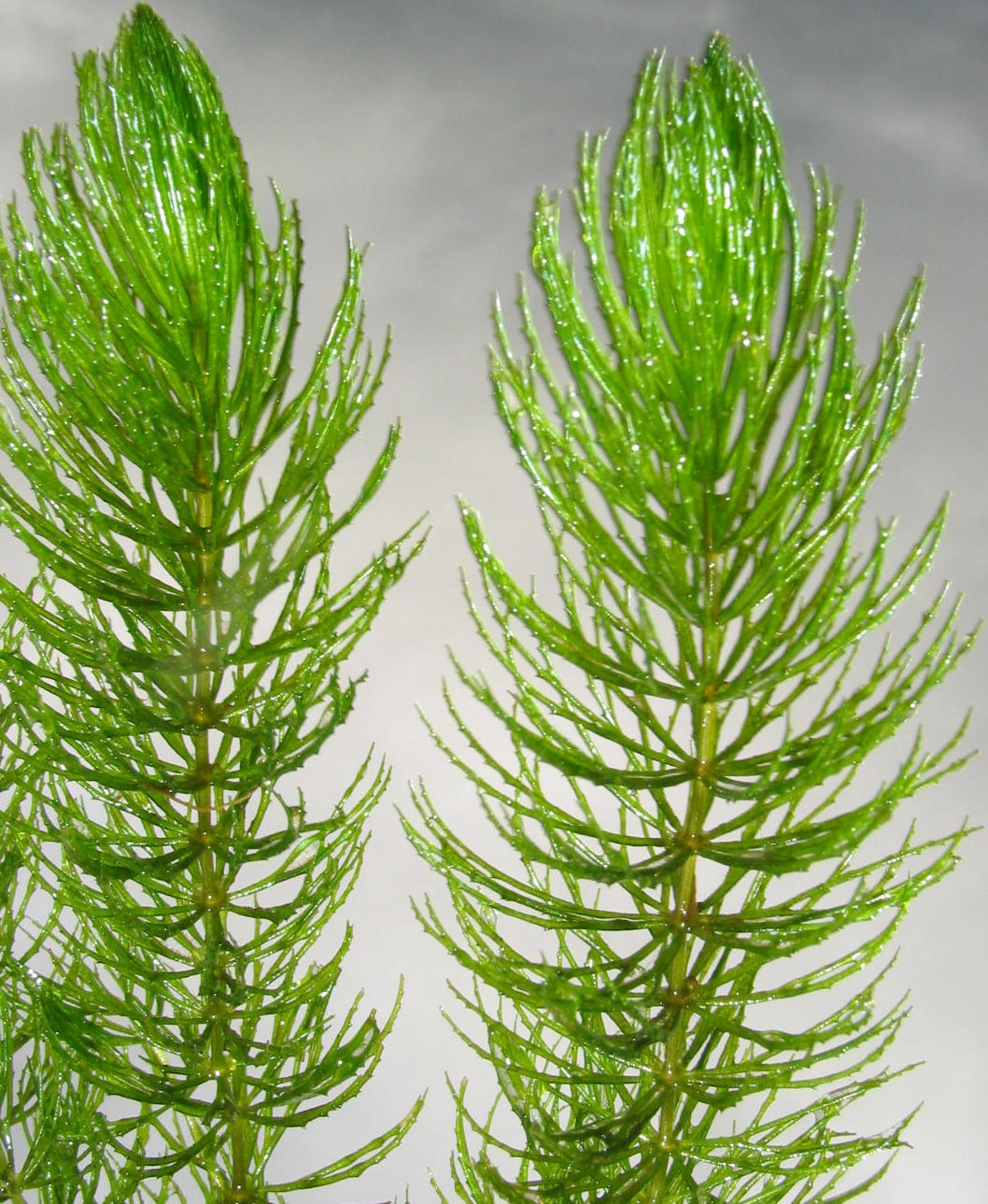
Hornwort
A rootless submerged plant that provides underwater structure and must be kept from becoming excessive.

Anacharis / Elodea
A commonly recognized submerged plant group; species identification matters because rules differ.
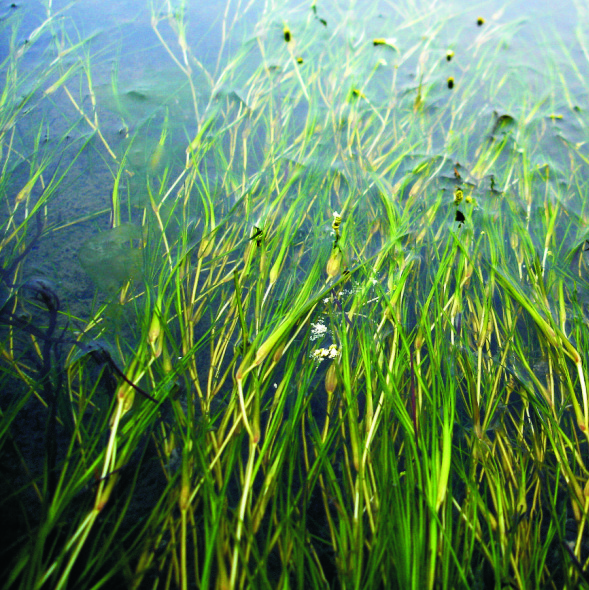
Vallisneria
Ribbonlike underwater leaves can form useful submerged beds, but runners may create dense colonies and require thinning.
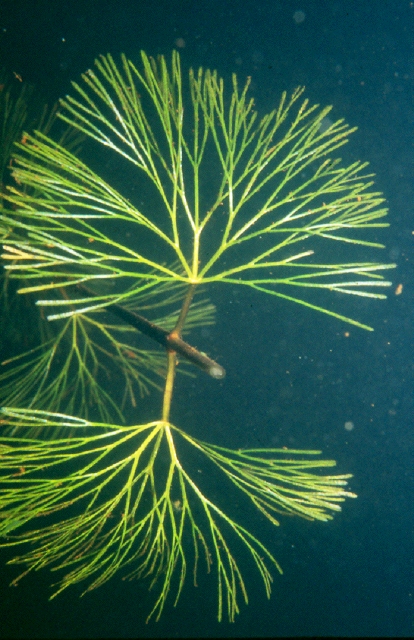
Cabomba / Fanwort
Fine-textured submerged foliage. Some species are invasive or restricted, so identification is essential.

Native Pondweed
A broad plant group that may offer food and habitat when a locally suitable native species is selected.
Draft plant names and representative images for layout review. Final photographs and species recommendations will be approved before publication.
Explore Aquatic Plants by Group
Select a plant group, then click any plant to see a short introduction. This is a draft catalog for review; final selections depend on the individual water feature, climate, maintenance goals, and local regulations.
Bog Plants
Plants suited to consistently moist soil and shallow edges, where they can add color, habitat, and shoreline interest.
Pickerelweed
Upright foliage with purple-blue flower spikes. Useful around sunny, shallow pond margins, but its rhizomes can spread and should be managed.
Lizard’s Tail
A moisture-loving native with curved white flower spikes that can soften naturalistic edges.
Iris
Aquatic and moisture-loving iris are available in blue, purple, white, yellow, pink, and multicolored varieties. Species must be selected carefully: yellow flag iris can spread aggressively and is considered invasive in many areas.
Marsh Marigold
A low-growing bog plant valued for bright spring flowers in cool, consistently moist conditions.
Sweet Flag
Grasslike foliage that provides texture at wet margins. Some forms spread by rhizomes, so compact varieties and contained planting are preferred.
Marginal Plants
Emergent plants rooted in shallow water, with most of their foliage held above the surface.
Dwarf Papyrus
A compact architectural plant for shallow shelves and containers in warm, sunny settings.
Arrowhead
Recognizable arrow-shaped leaves and white flowers make this a strong natural-edge plant.
Water Canna
Tall tropical-looking foliage and flowers for larger features with adequate shallow planting space.
Taro
Bold heart-shaped leaves provide height and a lush tropical character. It can spread in warm wet areas, may need containment, and all raw plant parts contain irritating calcium oxalate crystals.
Horsetail
A vertical, reedlike accent that spreads aggressively through underground rhizomes. It is difficult to remove once established and is best kept in a sealed container.
Water Lilies & Lotus
Rooted aquatic plants whose leaves and flowers create surface color, shade, and visual focus.
Hardy Water Lily
Reliable seasonal flowers and floating leaves, with varieties available in several colors and sizes.
Tropical Water Lily
Often produces vivid flowers above the water and may bloom more freely in warm conditions.
American Lotus
A large native lotus with elevated leaves and pale yellow flowers. It spreads vigorously by rhizomes and can dominate shallow water unless contained and maintained.
Sacred Lotus
Dramatic leaves and flowers create a focal point, but vigorous rhizomes require ample room, strong containers, and regular growth control.
Victoria Amazonica — Giant Water Lily
The famous giant Amazon water lily produces enormous floating leaves. It requires a very large, warm, carefully managed display and is generally impractical for an ordinary residential pond.
Floating Plants
Plants that remain at or near the surface and can provide shade and nutrient uptake when carefully managed.
Water Hyacinth
Showy flowers and hanging roots, but it can spread rapidly and is restricted in some locations.
Water Lettuce
Rosettes of velvety leaves offer surface cover; use depends on climate, containment, and local rules.
Frogbit
A small floating plant with rounded leaves. Exact species identification and legality are important.
Duckweed
Tiny floating plants that reproduce quickly and may require frequent removal to maintain open water.
Azolla
A delicate floating fern that can form dense mats; appropriate use requires active management.
Submerged Plants
Plants growing primarily below the surface, where they can contribute habitat and biological activity.
Hornwort
A rootless submerged plant that provides underwater structure and must be kept from becoming excessive.
Anacharis / Elodea
A commonly recognized submerged plant group; species identification matters because rules differ.
Vallisneria
Ribbonlike underwater leaves can form useful submerged beds, but runners may create dense colonies and require thinning.
Cabomba / Fanwort
Fine-textured submerged foliage. Some species are invasive or restricted, so identification is essential.
Native Pondweed
A broad plant group that may offer food and habitat when a locally suitable native species is selected.
Draft plant names and representative images for layout review. Final photographs and species recommendations will be approved before publication.
Explore Aquatic Plants by Group
Select a plant group, then click any plant to see a short introduction. This is a draft catalog for review; final selections depend on the individual water feature, climate, maintenance goals, and local regulations.
Bog Plants
Plants suited to consistently moist soil and shallow edges, where they can add color, habitat, and shoreline interest.
Pickerelweed
Upright foliage with purple-blue flower spikes. Useful around sunny, shallow pond margins, but its rhizomes can spread and should be managed.
Lizard’s Tail
A moisture-loving native with curved white flower spikes that can soften naturalistic edges.
Iris
Aquatic and moisture-loving iris are available in blue, purple, white, yellow, pink, and multicolored varieties. Species must be selected carefully: yellow flag iris can spread aggressively and is considered invasive in many areas.
Marsh Marigold
A low-growing bog plant valued for bright spring flowers in cool, consistently moist conditions.
Sweet Flag
Grasslike foliage that provides texture at wet margins. Some forms spread by rhizomes, so compact varieties and contained planting are preferred.
Marginal Plants
Emergent plants rooted in shallow water, with most of their foliage held above the surface.
Dwarf Papyrus
A compact architectural plant for shallow shelves and containers in warm, sunny settings.
Arrowhead
Recognizable arrow-shaped leaves and white flowers make this a strong natural-edge plant.
Water Canna
Tall tropical-looking foliage and flowers for larger features with adequate shallow planting space.
Taro
Bold heart-shaped leaves provide height and a lush tropical character. It can spread in warm wet areas, may need containment, and all raw plant parts contain irritating calcium oxalate crystals.
Horsetail
A vertical, reedlike accent that spreads aggressively through underground rhizomes. It is difficult to remove once established and is best kept in a sealed container.
Water Lilies & Lotus
Rooted aquatic plants whose leaves and flowers create surface color, shade, and visual focus.
Hardy Water Lily
Reliable seasonal flowers and floating leaves, with varieties available in several colors and sizes.
Tropical Water Lily
Often produces vivid flowers above the water and may bloom more freely in warm conditions.
American Lotus
A large native lotus with elevated leaves and pale yellow flowers. It spreads vigorously by rhizomes and can dominate shallow water unless contained and maintained.
Sacred Lotus
Dramatic leaves and flowers create a focal point, but vigorous rhizomes require ample room, strong containers, and regular growth control.
Victoria Amazonica — Giant Water Lily
The famous giant Amazon water lily produces enormous floating leaves. It requires a very large, warm, carefully managed display and is generally impractical for an ordinary residential pond.
Floating Plants
Plants that remain at or near the surface and can provide shade and nutrient uptake when carefully managed.
Water Hyacinth
Showy flowers and hanging roots, but it can spread rapidly and is restricted in some locations.
Water Lettuce
Rosettes of velvety leaves offer surface cover; use depends on climate, containment, and local rules.
Frogbit
A small floating plant with rounded leaves. Exact species identification and legality are important.
Duckweed
Tiny floating plants that reproduce quickly and may require frequent removal to maintain open water.
Azolla
A delicate floating fern that can form dense mats; appropriate use requires active management.
Submerged Plants
Plants growing primarily below the surface, where they can contribute habitat and biological activity.
Hornwort
A rootless submerged plant that provides underwater structure and must be kept from becoming excessive.
Anacharis / Elodea
A commonly recognized submerged plant group; species identification matters because rules differ.
Vallisneria
Ribbonlike underwater leaves can form useful submerged beds, but runners may create dense colonies and require thinning.
Cabomba / Fanwort
Fine-textured submerged foliage. Some species are invasive or restricted, so identification is essential.
Native Pondweed
A broad plant group that may offer food and habitat when a locally suitable native species is selected.
Draft plant names and representative images for layout review. Final photographs and species recommendations will be approved before publication.
Explore Aquatic Plants by Group
Select a plant group, then click any plant to see a short introduction. This is a draft catalog for review; final selections depend on the individual water feature, climate, maintenance goals, and local regulations.
Bog Plants
Plants suited to consistently moist soil and shallow edges, where they can add color, habitat, and shoreline interest.
Pickerelweed
Upright foliage with purple-blue flower spikes. Useful around sunny, shallow pond margins, but its rhizomes can spread and should be managed.
Lizard’s Tail
A moisture-loving native with curved white flower spikes that can soften naturalistic edges.
Iris
Aquatic and moisture-loving iris are available in blue, purple, white, yellow, pink, and multicolored varieties. Species must be selected carefully: yellow flag iris can spread aggressively and is considered invasive in many areas.
Marsh Marigold
A low-growing bog plant valued for bright spring flowers in cool, consistently moist conditions.
Sweet Flag
Grasslike foliage that provides texture at wet margins. Some forms spread by rhizomes, so compact varieties and contained planting are preferred.
Marginal Plants
Emergent plants rooted in shallow water, with most of their foliage held above the surface.
Dwarf Papyrus
A compact architectural plant for shallow shelves and containers in warm, sunny settings.
Arrowhead
Recognizable arrow-shaped leaves and white flowers make this a strong natural-edge plant.
Water Canna
Tall tropical-looking foliage and flowers for larger features with adequate shallow planting space.
Taro
Bold heart-shaped leaves provide height and a lush tropical character. It can spread in warm wet areas, may need containment, and all raw plant parts contain irritating calcium oxalate crystals.
Horsetail
A vertical, reedlike accent that spreads aggressively through underground rhizomes. It is difficult to remove once established and is best kept in a sealed container.
Water Lilies & Lotus
Rooted aquatic plants whose leaves and flowers create surface color, shade, and visual focus.
Hardy Water Lily
Reliable seasonal flowers and floating leaves, with varieties available in several colors and sizes.
Tropical Water Lily
Often produces vivid flowers above the water and may bloom more freely in warm conditions.
American Lotus
A large native lotus with elevated leaves and pale yellow flowers. It spreads vigorously by rhizomes and can dominate shallow water unless contained and maintained.
Sacred Lotus
Dramatic leaves and flowers create a focal point, but vigorous rhizomes require ample room, strong containers, and regular growth control.
Victoria Amazonica — Giant Water Lily
The famous giant Amazon water lily produces enormous floating leaves. It requires a very large, warm, carefully managed display and is generally impractical for an ordinary residential pond.
Floating Plants
Plants that remain at or near the surface and can provide shade and nutrient uptake when carefully managed.
Water Hyacinth
Showy flowers and hanging roots, but it can spread rapidly and is restricted in some locations.
Water Lettuce
Rosettes of velvety leaves offer surface cover; use depends on climate, containment, and local rules.
Frogbit
A small floating plant with rounded leaves. Exact species identification and legality are important.
Duckweed
Tiny floating plants that reproduce quickly and may require frequent removal to maintain open water.
Azolla
A delicate floating fern that can form dense mats; appropriate use requires active management.
Submerged Plants
Plants growing primarily below the surface, where they can contribute habitat and biological activity.
Hornwort
A rootless submerged plant that provides underwater structure and must be kept from becoming excessive.
Anacharis / Elodea
A commonly recognized submerged plant group; species identification matters because rules differ.
Vallisneria
Ribbonlike underwater leaves can form useful submerged beds, but runners may create dense colonies and require thinning.
Cabomba / Fanwort
Fine-textured submerged foliage. Some species are invasive or restricted, so identification is essential.
Native Pondweed
A broad plant group that may offer food and habitat when a locally suitable native species is selected.
Draft plant names and representative images for layout review. Final photographs and species recommendations will be approved before publication.
Explore Aquatic Plants by Group
Select a plant group, then click any plant to see a short introduction. This is a draft catalog for review; final selections depend on the individual water feature, climate, maintenance goals, and local regulations.
Bog Plants
Plants suited to consistently moist soil and shallow edges, where they can add color, habitat, and shoreline interest.
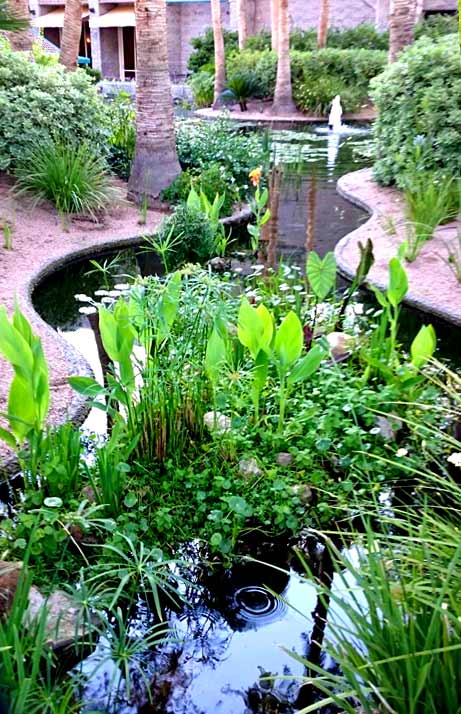
Pickerelweed
Upright foliage with purple-blue flower spikes. Useful around sunny, shallow pond margins, but its rhizomes can spread and should be managed.
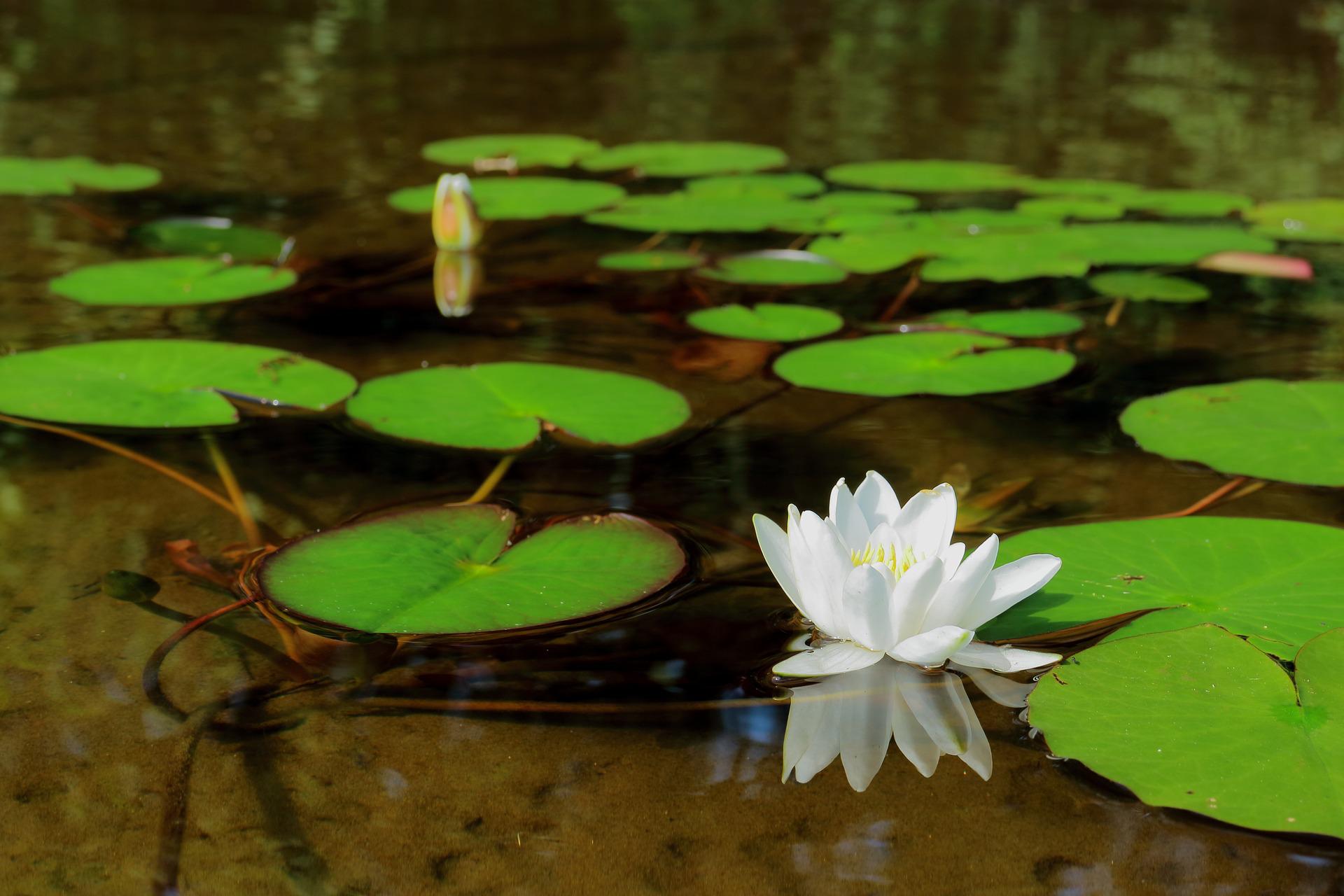
Lizard’s Tail
A moisture-loving native with curved white flower spikes that can soften naturalistic edges.
Iris
Aquatic and moisture-loving iris are available in blue, purple, white, yellow, pink, and multicolored varieties. Species must be selected carefully: yellow flag iris can spread aggressively and is considered invasive in many areas.
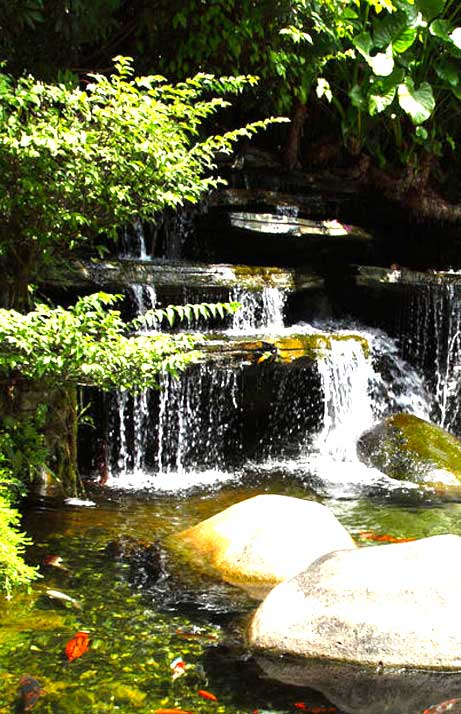
Marsh Marigold
A low-growing bog plant valued for bright spring flowers in cool, consistently moist conditions.
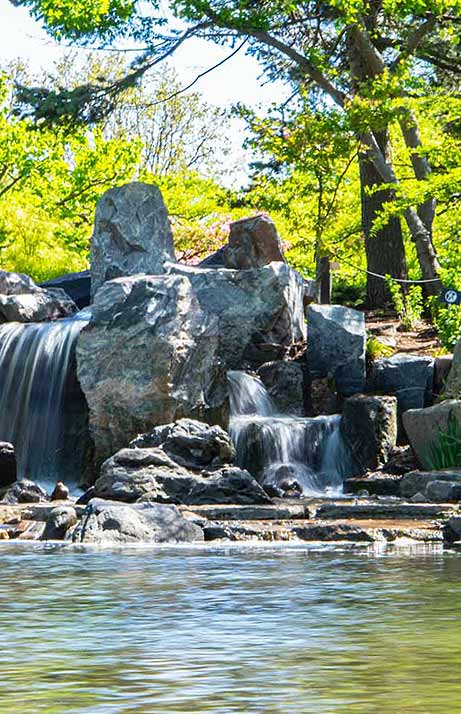
Sweet Flag
Grasslike foliage that provides texture at wet margins. Some forms spread by rhizomes, so compact varieties and contained planting are preferred.
Marginal Plants
Emergent plants rooted in shallow water, with most of their foliage held above the surface.
Dwarf Papyrus
A compact architectural plant for shallow shelves and containers in warm, sunny settings.
Arrowhead
Recognizable arrow-shaped leaves and white flowers make this a strong natural-edge plant.
Water Canna
Tall tropical-looking foliage and flowers for larger features with adequate shallow planting space.
Taro
Bold heart-shaped leaves provide height and a lush tropical character. It can spread in warm wet areas, may need containment, and all raw plant parts contain irritating calcium oxalate crystals.
Horsetail
A vertical, reedlike accent that spreads aggressively through underground rhizomes. It is difficult to remove once established and is best kept in a sealed container.
Water Lilies & Lotus
Rooted aquatic plants whose leaves and flowers create surface color, shade, and visual focus.
Hardy Water Lily
Reliable seasonal flowers and floating leaves, with varieties available in several colors and sizes.
Tropical Water Lily
Often produces vivid flowers above the water and may bloom more freely in warm conditions.
American Lotus
A large native lotus with elevated leaves and pale yellow flowers. It spreads vigorously by rhizomes and can dominate shallow water unless contained and maintained.
Sacred Lotus
Dramatic leaves and flowers create a focal point, but vigorous rhizomes require ample room, strong containers, and regular growth control.
Victoria Amazonica — Giant Water Lily
The famous giant Amazon water lily produces enormous floating leaves. It requires a very large, warm, carefully managed display and is generally impractical for an ordinary residential pond.
Floating Plants
Plants that remain at or near the surface and can provide shade and nutrient uptake when carefully managed.
Water Hyacinth
Showy flowers and hanging roots, but it can spread rapidly and is restricted in some locations.
Water Lettuce
Rosettes of velvety leaves offer surface cover; use depends on climate, containment, and local rules.
Frogbit
A small floating plant with rounded leaves. Exact species identification and legality are important.
Duckweed
Tiny floating plants that reproduce quickly and may require frequent removal to maintain open water.
Azolla
A delicate floating fern that can form dense mats; appropriate use requires active management.
Submerged Plants
Plants growing primarily below the surface, where they can contribute habitat and biological activity.
Hornwort
A rootless submerged plant that provides underwater structure and must be kept from becoming excessive.
Anacharis / Elodea
A commonly recognized submerged plant group; species identification matters because rules differ.
Vallisneria
Ribbonlike underwater leaves can form useful submerged beds, but runners may create dense colonies and require thinning.
Cabomba / Fanwort
Fine-textured submerged foliage. Some species are invasive or restricted, so identification is essential.
Native Pondweed
A broad plant group that may offer food and habitat when a locally suitable native species is selected.
Draft plant names and representative images for layout review. Final photographs and species recommendations will be approved before publication.
Explore Aquatic Plants by Group
Select a plant group, then click any plant to see a short introduction. This is a draft catalog for review; final selections depend on the individual water feature, climate, maintenance goals, and local regulations.
Bog Plants
Plants suited to consistently moist soil and shallow edges, where they can add color, habitat, and shoreline interest.
Pickerelweed
Upright foliage with purple-blue flower spikes. Useful around sunny, shallow pond margins when its spread is managed.
Lizard’s Tail
A moisture-loving native with curved white flower spikes that can soften naturalistic edges.
Blue Flag Iris
Architectural leaves and seasonal flowers. Species and placement must suit the local climate and site.
Marsh Marigold
A low-growing bog plant valued for bright spring flowers in cool, consistently moist conditions.
Sweet Flag
Grasslike foliage that provides texture at wet margins. Compact varieties can work well in contained areas.
Marginal Plants
Emergent plants rooted in shallow water, with most of their foliage held above the surface.
Dwarf Papyrus
A compact architectural plant for shallow shelves and containers in warm, sunny settings.
Arrowhead
Recognizable arrow-shaped leaves and white flowers make this a strong natural-edge plant.
Water Canna
Tall tropical-looking foliage and flowers for larger features with adequate shallow planting space.
Taro
Bold heart-shaped leaves provide height and a lush tropical character near protected pond margins.
Horsetail
A vertical, reedlike accent best used in containers because its growth can be vigorous.
Water Lilies & Lotus
Rooted aquatic plants whose leaves and flowers create surface color, shade, and visual focus.
Hardy Water Lily
Reliable seasonal flowers and floating leaves, with varieties available in several colors and sizes.
Tropical Water Lily
Often produces vivid flowers above the water and may bloom more freely in warm conditions.
American Lotus
A large native lotus with elevated leaves and pale yellow flowers, suited to spacious managed systems.
Sacred Lotus
Dramatic leaves and flowers create a focal point, but the plant needs ample room and growth control.
Yellow Pond Lily
A robust rooted plant with floating leaves and yellow blooms for appropriate naturalized systems.
Floating Plants
Plants that remain at or near the surface and can provide shade and nutrient uptake when carefully managed.
Water Hyacinth
Showy flowers and hanging roots, but it can spread rapidly and is restricted in some locations.
Water Lettuce
Rosettes of velvety leaves offer surface cover; use depends on climate, containment, and local rules.
Frogbit
A small floating plant with rounded leaves. Exact species identification and legality are important.
Duckweed
Tiny floating plants that reproduce quickly and may require frequent removal to maintain open water.
Azolla
A delicate floating fern that can form dense mats; appropriate use requires active management.
Submerged Plants
Plants growing primarily below the surface, where they can contribute habitat and biological activity.
Hornwort
A rootless submerged plant that provides underwater structure and must be kept from becoming excessive.
Anacharis / Elodea
A commonly recognized submerged plant group; species identification matters because rules differ.
Vallisneria
Ribbonlike underwater leaves can form useful submerged beds in suitable water and light conditions.
Cabomba / Fanwort
Fine-textured submerged foliage. Some species are invasive or restricted, so identification is essential.
Native Pondweed
A broad plant group that may offer food and habitat when a locally suitable native species is selected.
Draft plant names and representative images for layout review. Final photographs and species recommendations will be approved before publication.
Aquatic Plants
Thoughtful plant selection adds color, shade, habitat, food, biological support, nutrient suppression, runoff reduction, and natural character to ponds, lakes, and other water features.
Plants Selected for the Water
Aquatic plants are chosen according to water depth, soil, sunlight, climate, growth habit, and the needs of the individual system.
This page will feature available and commonly recommended water lilies, lotus, taro, hyacinth, marginal plants, submerged plants, and other aquatic species.
ASK ABOUT AQUATIC PLANTSExplore Plants by Group
Each plant can have a photograph, common name, and a short practical note about where it grows and why it may—or may not—belong in a particular system.
Bog Plants
Moist-soil plants used around pond edges and filtration areas.
Marginal Plants
Shallow-water plants that soften edges and provide habitat.
Water Lilies & Lotus
Rooted flowering plants with floating or elevated leaves.
Floating Plants
Plants that float freely or spread across the water surface.
Submerged Plants
Underwater species that provide cover and biological support.
Aquatic Plants
Thoughtful plant selection adds color, shade, habitat, biological support, and natural character to ponds and water features.
Plants Selected for the Water
Aquatic plants are chosen according to water depth, sunlight, climate, growth habit, and the needs of the individual system.
This page will feature available and commonly recommended water lilies, lotus, taro, hyacinth, marginal plants, submerged plants, and other aquatic species.
ASK ABOUT AQUATIC PLANTSPlant Gallery
Aquatic Plants
Thoughtful plant selection adds color, shade, habitat, biological support, and natural character to ponds and water features.
Plants Selected for the Water
Aquatic plants are chosen according to water depth, sunlight, climate, growth habit, and the needs of the individual system.
This page will feature available and commonly recommended water lilies, lotus, taro, hyacinth, marginal plants, submerged plants, and other aquatic species.
ASK ABOUT AQUATIC PLANTS