
Fountains, Lighting & Aeration
Thoughtfully selected equipment can add movement, sound, nighttime interest, circulation, and valuable oxygen exchange to ponds, lakes, and water features. Click a category, then select an option to learn more.
Fountains
Fountains create movement, sound, visual interest, and surface oxygen exchange. Spray pattern and horsepower should be matched to the surrounding space, prevailing wind, water depth, and desired appearance.
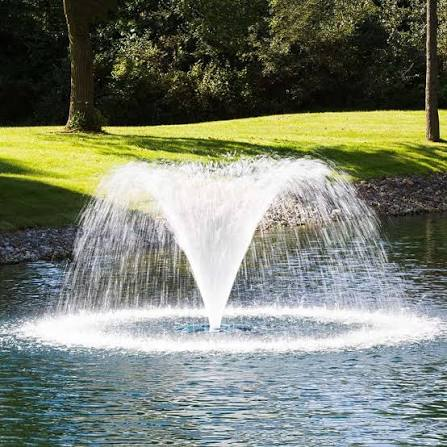
Decorative Patterns
Wide, tiered, and umbrella-style patterns create an attractive centerpiece without requiring extreme height. The right nozzle can balance appearance, sound, splash radius, and wind drift.

Tall Plume Fountains
Tall vertical displays provide long-distance visibility and a dramatic focal point. Higher patterns require careful sizing, adequate water depth, sufficient horsepower, and room for wind-blown spray.

Floating Fountains
Floating units are useful where changing water levels or deep basins make a fixed installation impractical. They can combine circulation, display patterns, and optional lighting in one serviceable assembly.

Custom Display Selection
Nozzle pattern, pump size, cable length, intake protection, and placement all affect the final result. Tomson’s can help select a display appropriate for the property and water feature.
Important: Fountains primarily move and oxygenate surface water. In a deep pond or lake, an attractive spray does not necessarily circulate or oxygenate the bottom. Dedicated bottom-diffused aeration may still be necessary.
Lighting
Properly placed lighting extends the enjoyment of a water feature after dark, highlights movement and texture, and can improve visibility around fountains and shorelines.

Underwater LED Lights
Submersible fixtures can illuminate fountain spray, waterfalls, rockwork, plants, and shallow water. Low-voltage LED systems provide efficient, focused light with less heat and maintenance than older fixtures.

Fountain Lighting
Lights positioned around a floating or fixed fountain make moving water visible at night. Beam angle, brightness, water clarity, and fixture placement determine whether the result looks balanced or harsh.

Color & Controls
Color-changing fixtures, timers, and compatible controllers can create seasonal or event lighting. A restrained program often produces a more professional result than constantly changing effects.

Placement & Serviceability
Fixtures should be positioned to limit glare, protect cables, and remain accessible for cleaning or replacement. Existing electrical service must be suitable, protected, and installed in accordance with applicable requirements.
Aeration
Aeration is not merely decorative. In many large ponds and lakes, it is essential equipment that supports aquatic life, circulation, water quality, and more stable biological conditions.

Bottom-Diffused Aeration
Air is delivered to diffusers near the bottom, creating rising columns of bubbles that move deep water toward the surface. Correctly sized systems help reduce stratification and improve whole-water-column circulation.

Surface Aerators
Surface units rapidly mix and expose water to the atmosphere. They can be useful for shallow systems, localized circulation, emergency oxygen support, or situations where bottom diffusion is not practical.

Fountain vs. Aeration
A fountain may provide useful surface movement, but spray height should not be mistaken for complete circulation. Deep or stratified systems usually require equipment designed to move water from the bottom upward.

Sizing & Placement
Depth, acreage, shape, temperature, oxygen demand, electrical access, and diffuser placement all matter. An undersized or poorly positioned system may leave stagnant areas or fail to address the intended problem.
This guide introduces several commonly used fountain, lighting, and aeration options. Final equipment selection depends on the individual water feature and should be based on practical site conditions rather than appearance alone.